Early Doors, Late Lots: A Chauffeured Antiques Circuit from London in 2026
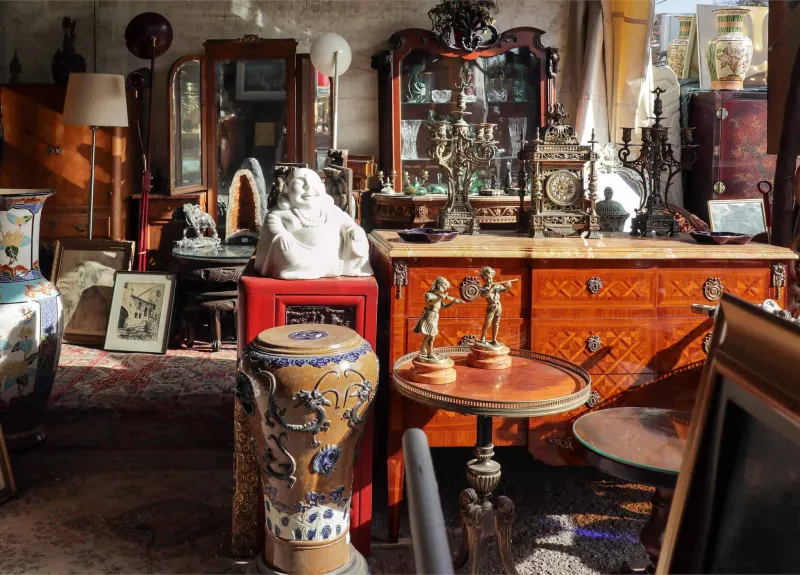
Photo: antiques fair stalls vintage furniture outside British showground, via www.fleamapket.com
Why the fair calendar rewards a driver
An antiques fair is one of the few days out in Britain where the logistics genuinely determine the quality of the browsing. Arrive at ten and the best stands have already been picked over by the trade. Arrive at half past eight and the car park is a field, the fields are muddy, and the queue for a bacon roll is longer than the queue for the good chairs. Then, having found precisely the thing you wanted, you must consider how a nineteenth-century chest of drawers is to be conveyed home in a saloon car already containing four people.
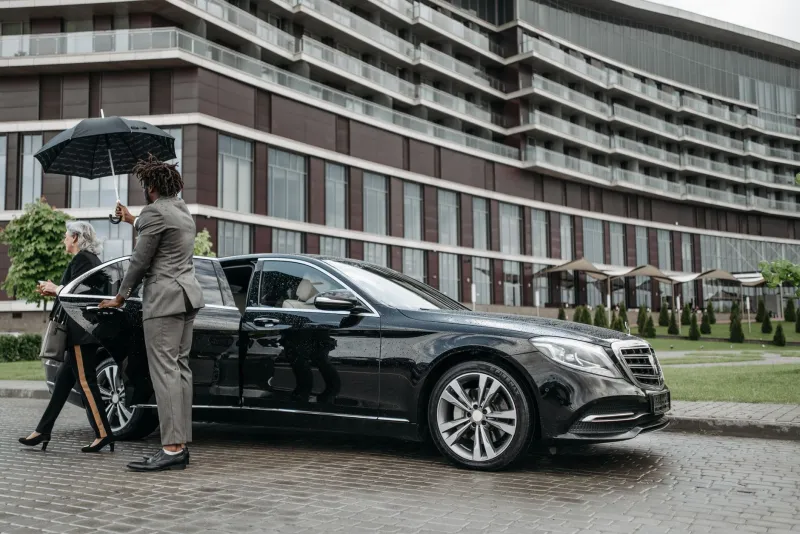
A chauffeured day removes almost all of that friction. The driver deals with the lanes, the fields and the loading. The passenger deals with the buying.
The three anchors
Newark International Antiques and Collectors Fair
Held at the Newark and Nottinghamshire Showground, this is the largest event of its kind in Europe and the one against which others are measured. Several hundred stands, a strong continental presence and a serious trade turnout. From central London the run is roughly two and a quarter hours via the A1, which means leaving at a quarter past five for an early entry ticket. The reward is a first walk down the aisles while the light is still poor and the dealers are still arranging stock.
Ardingly
At the South of England Showground in West Sussex, Ardingly is a more pastoral affair, an hour and three-quarters from London on a good morning. The mix leans towards architectural salvage, garden statuary and painted furniture, and the setting makes it a comfortable day even for a companion who has come along without any intention of buying anything.
Battersea and the London fairs
The Sunday fairs at Battersea remain the civilised option: twenty-five minutes from Mayfair, no early start required, and a quality of stock that rewards a slow second lap. For the truly committed, the Tuesday morning market at Kempton Park offers a grittier and often more interesting hunt, and it is over by early afternoon.
The early start, and what it does for the eye
There is a reason dealers arrive before the gates. The first hour is quieter, the light is flatter, and the negotiation is easier because nobody has yet been worn down. A chauffeur-driven departure at five o'clock need not be uncomfortable: the rear cabin reclines, the heating is already on, and the first hour of the journey can be spent asleep rather than negotiating the North Circular.
When you buy something large
This is where a driven day earns its keep. A few practical points, learned rather than theorised:
- Ask the stand holder for dimensions before committing, and text them to your driver so the boot can be assessed honestly.
- A saloon boot will take a pair of lamps, a rug or a small side table. A chest, a settee or a mirror of any size requires an estate or a people carrier, which is worth specifying at the time of booking.
- Blankets, bubble wrap and two ratchet straps should be in the vehicle as a matter of course. Most operators keep them; ask.
- For genuinely fragile pieces, or for anything that will not fit, take a card and arrange a specialist courier. A dealer who has sold at Newark for twenty years will know three of them.
- Photograph the piece in situ before it is wrapped, and keep the receipt with the condition notes. It will be needed for insurance.
Dealer etiquette, briefly
Ask before handling anything marked. Do not open a case that has been closed. Save the serious negotiation for the end of the day, when a dealer would rather sell than pack. Cash still works, cards increasingly do, and a polite question about provenance will often produce a better price than a blunt one about discount. None of this is a secret, but it is remarkable how often it is forgotten by visitors arriving in a hurry.
The way home
The return leg is the part most people fail to plan. A late-afternoon departure from Newark coincides with the worst of the A1, and a mirror strapped into the back of a warm car is a distraction to everyone. Build in a stop: a country pub, a garden centre with decent coffee, anywhere that allows the day to end at its own pace rather than in a traffic queue outside Stevenage.
A short checklist
- Book early entry where it exists, and check the fair's weekday pattern, which varies by venue.
- Confirm the vehicle size against your realistic ambition, not your current furniture.
- Carry a tape measure and a torch; many fairgrounds are poorly lit.
- Agree the collection point with the driver by phone before you arrive, so the car is at the gate when you need it.
- Tell the driver in advance if you expect to buy, so the loading plan is settled before the day begins.
A well-managed antiques day is a reminder of why driving matters less than arriving. Leave the parking to somebody else and the browsing takes on a different character altogether.