Parish Registers and Quiet Lanes: A Chauffeured Ancestry Day in 2026
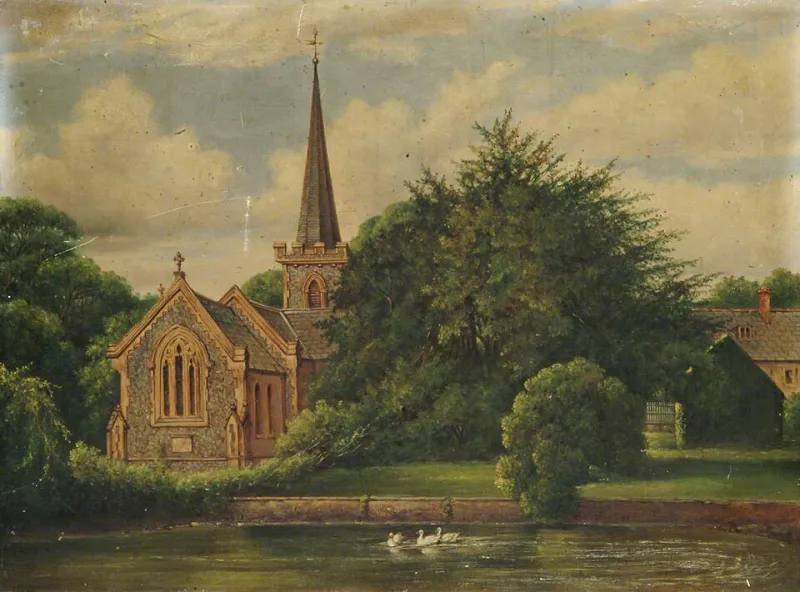
Photo: anonymous , Public domain, via Wikimedia Commons
Family history has a way of pulling people off the motorway and down lanes that were never designed for a modern car. A great-grandfather baptised in a Norfolk parish, a marriage recorded in a Carlisle register office, a headstone in a hillside churchyard reachable only through a gate that does not appear on a satnav — these are the destinations of a very particular kind of British day out. They are also, without careful planning, the raw material of a thoroughly exhausting one.
This is where a chauffeur earns a place in the itinerary. Not as a flourish, but as the element that holds the day together: someone who reads the route, knows which lanes are single-track, keeps an eye on the clock and waits quietly while you stand in a churchyard and think.
Begin with the paperwork, not the road
The most common mistake in ancestry travel is to plan the driving first. The better sequence is records, then appointments, then road. Before any vehicle is booked, gather what you actually know: names, approximate dates, parish or registration district, occupation, and any address that appears on a certificate. A folder of printouts will do; a shared digital document is better, because it can be sent to the office in advance.
Provide the chauffeur with the day's intended stops, approximate times, and — crucially — notes on access. A farm track with a cattle grid is a different proposition from a town centre record office. Mention mobility needs, whether anyone uses a stick or a wheelchair, and how far you are comfortable walking on uneven ground. This is the sort of detail that determines whether a rear cabin becomes a restful base or simply a waiting car.
The archive appointment
Record offices are not shops. The National Archives at Kew operates on a structured weekly pattern and expects visitors to order documents in advance; county record offices across England, Scotland and Wales frequently require a booking, and many issue a limited number of documents per reader per day. Opening hours are often short, some close for lunch, and a good number are shut on Mondays. Photography permits vary from place to place, as do copying charges and the rules on bags and coats.
Build the day around the archive, not the other way round. A morning appointment of two to three hours, followed by a light lunch, followed by one churchyard or village stop, is a realistic shape. Two archives in one day is not. Nor, in truth, is an archive and three cemeteries.
Churchyards: the etiquette of standing back
A grave is not a visitor attraction, and a churchyard is not a park. The register may be inside the porch, the incumbent may hold the key to a locked building, and the plot records for a council cemetery will sit with the cemetery office rather than the parish. Telephone ahead where possible and ask what is permitted.
Once there, a few quiet conventions matter. Do not scrub or treat a stone; lichen and weathering are part of the memorial and can be damaged by good intentions. Do not remove plants or trinkets left by others, even if they appear neglected. Do not photograph mourners, funeral parties or staff. Keep voices low, and if a service is in progress, wait at a distance rather than retreating to a car with the engine running. A parked vehicle with a warm cabin is a comfort; a parked vehicle with its engine idling beside a lychgate is an intrusion.
Flowers are welcome if they are appropriate to the season and placed rather than pressed into the ground. A short pause before leaving is often more meaningful than any arrangement.
Sequencing a day that respects distance
British distances deceive. Forty miles on a map can mean ninety minutes on the ground once a market town, a level crossing and a stretch of single-track lane are accounted for. The rule for a chauffeured ancestry day is two substantive stops beyond the archive, with generous buffers, and a firm decision about which one can be sacrificed if the morning overruns.
Group stops by geography rather than by family branch. A morning in one registration district, an afternoon in the next parish along, and a return leg that does not double back is far kinder than chasing four counties in six hours.
The lanes themselves
Rural Britain is full of roads that demand patience: passing places on the fells, high hedges in Devon and Dorset, fords that flood after rain, and farm gates that open without warning. A long-wheelbase saloon is a magnificent thing on the A1 and an awkward one on a Cornish lane. Where access is genuinely tight, the sensible arrangement is to be set down at the nearest safe point and walk the last few hundred yards — something a chauffeur can judge on the day, with local knowledge and a careful eye.
Weather changes the calculation too. Winter light fades by half past four, and a churchyard visited at dusk is a different experience from one visited at noon. Ask for the graveyard stop to be placed before the archive rather than after, if the days are short.
What to leave in the car
A notebook and a second pen. A folder for certificates and photocopies. Sturdy shoes in the boot. Water, a coat, and a phone charger. A flask if the day is long. The rear cabin becomes a small mobile study, and the quiet half hour between stops is often when a name finally falls into place.
The drive home
Genealogy is tiring in a way that is hard to predict. There is the concentration of the search room, the physical effort of uneven ground, and the emotional weight of a name carved into stone. The return journey should be a soft landing: a route that avoids the worst of the evening traffic, a stop for tea if the day allows, and no obligation to talk.
That, in the end, is the argument for travelling this way. Not luxury for its own sake, but the removal of every small friction that would otherwise sit between you and the thing you came to find.