Narrow Lanes and a Late Lunch: Chauffeur Days at Shelsley Walsh and Prescott in 2026
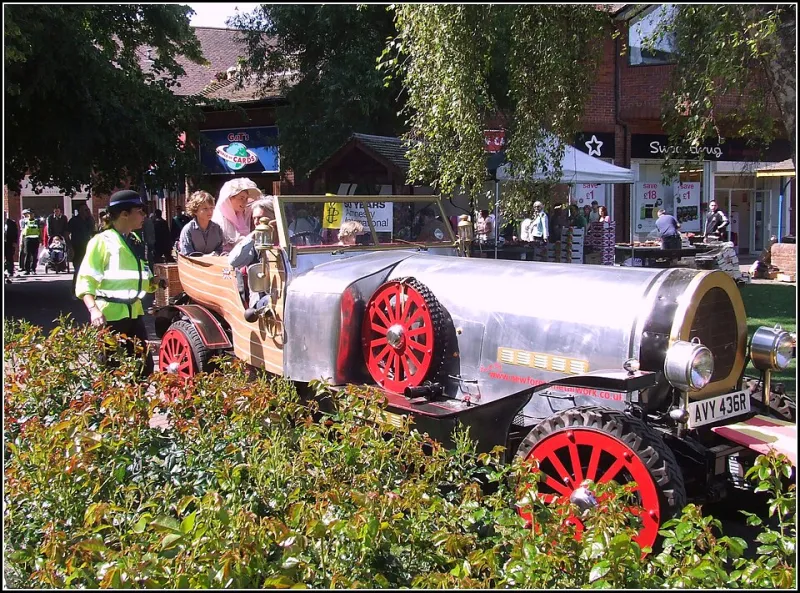
Photo: Peter, CC BY 2.0, via Wikimedia Commons
Two hills, one philosophy
There is a particular kind of British motorsport that has never needed a grandstand. It happens on a single ribbon of tarmac laid up a wooded bank in Worcestershire or Gloucestershire, watched from a grassy slope by people holding a glass and a pork pie, and it has been happening with remarkable consistency for the better part of a century.
Hill climbing is the oldest branch of the sport and the least altered. Cars run one at a time, against the clock, up a course that has not changed in any meaningful way since the Edwardian era. The paddock is open, the drivers are approachable, and the loudest noise is frequently a vintage engine being warmed with obvious reluctance. It is motorsport as a garden party, and it suits a chauffeured day better than almost any other event on the calendar.
Shelsley Walsh: the oldest thread
In the Teme Valley, a few miles west of Worcester, Shelsley Walsh has been in continuous use for motorsport since 1905 and is the oldest venue in the world still running on its original course. The climb is short, under a thousand yards, and brutal: a steep start, a pair of difficult bends and a finish line that arrives sooner than the new spectator expects.
The atmosphere is domestic in the best sense. A marquee, a bar, a clubhouse with photographs going back to the age of chain drive. The Midland Automobile Club has run the place for more than a century and it shows, in the manner of an institution that knows exactly what it is.
Prescott: Bugattis on the bank
Near Gotherington in Gloucestershire, Prescott occupies a bowl of land beneath the Cotswold escarpment and has been the home of the Bugatti Owners' Club since the late 1930s. The hill is longer and more technical than Shelsley, with a famous sequence of bends that rewards commitment and punishes optimism.
What distinguishes Prescott, beyond the racing, is the presence of the marque that built it. Vintage Bugattis in number, owners in the paddock, and the Bugatti Trust on site, which is worth an hour of anybody's afternoon regardless of their enthusiasm for pre-war engineering.
Why the lanes make a driver sensible
The approach roads to both venues are narrow, hedge-lined and frequently single-track. On a hill-climb morning, they carry a slow procession of spectators, caravans and people who have misread a satnav instruction. Parking is in fields, on grass, in whatever arrangement the marshals have devised that season.
A chauffeur-driven arrival changes the character of that final mile entirely. The driver knows the approach, knows where the queue forms, drops guests at the gate and takes the car away to park. When the day is over, guests walk out to a waiting vehicle instead of standing in a field waiting for a gap in the traffic on a road barely wide enough for one car.
There is a further consideration at events of this size: once inside, one is on a grassy bank for six hours. A car that can be summoned to collect coats, deliver the hamper or provide a warm seat at four o'clock is a considerable luxury, and it is one that no amount of enthusiasm will supply from the driver's seat of one's own car.
The hamper, properly planned
The picnic is not an incidental. At both venues, the best position is on the bank above the course, and the day is genuinely structured around sitting there. Sensible arrangements include:
- A folding table and two proper chairs, which many operators will carry if asked in advance.
- Food that survives a warm morning: cured meats, hard cheese, good bread, something with vinegar in it.
- Real glassware rather than plastic, and a cool box that stays in the vehicle until required.
- A blanket for the later hours, when the sun drops behind the trees and the temperature follows.
Building the day
The pattern at both hills is broadly similar. Practice and qualifying runs occupy the morning, when the air is cool and the engines at their best. The lunch interval is a genuine pause, with the paddock open and the hill quiet. Timed runs follow in the afternoon, culminating in the run-offs, by which point the leading cars are being driven with an edge that the morning never showed.
A well-planned day therefore looks like this: an unhurried arrival mid-morning, a walk down to the paddock before the crowds thicken, a position taken on the bank for the afternoon runs, and a departure either just before or just after the final run-off, depending on appetite for traffic.
A late lunch, or an early supper
Neither venue is surrounded by great gastronomy, which is precisely why a short drive afterwards is worth arranging. The villages and market towns within twenty minutes of either hill hold a number of comfortable pubs and country restaurants where a table at half past four is easy to secure and considerably easier to enjoy than a plate eaten standing up in a field. Booking ahead is advisable; asking for a quiet corner is not unreasonable.
The departure
By five o'clock the car parks begin to empty and the lanes become a polite, slow procession of enthusiasts heading in the same direction. This is the moment when a driver is worth more than the day itself: the guests are tired, the light is going, and there is a two-hour journey home. Being able to recline, review the photographs and say nothing at all is a fine conclusion to a fine afternoon.
Hill climbing has survived for more than a century by resisting the urge to modernise. A chauffeured day is not an attempt to change it, merely to arrive at the bank rested, and to leave it in the same condition.