Straw Hats, Stewards and a Staged Departure: Chauffeured Henley Royal Regatta in 2026
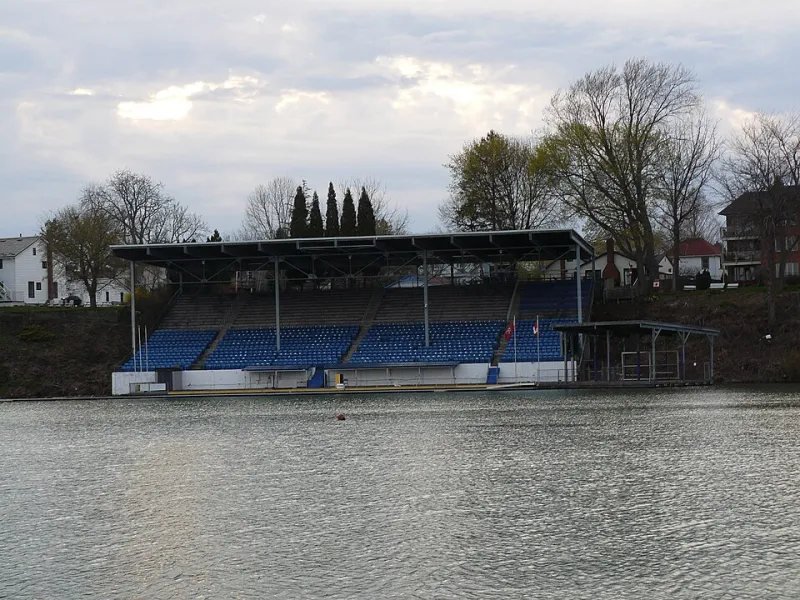
Photo: Gogerr, CC BY-SA 4.0, via Wikimedia Commons
Few British summer occasions ask so much of a guest before a single oar has touched the water. Henley Royal Regatta is a sporting fixture, certainly, but it is also a test of logistics: a town of modest size receiving a very large number of very well-dressed visitors, most of whom arrive within the same ninety minutes and all of whom wish to leave at roughly the same moment. A chauffeur does not remove that arithmetic. What a chauffeur does is absorb it, so that the passenger's day begins at the riverbank rather than in a queue on the Marlow Road.
The Shape of the Day Before the First Race
The Regatta's rhythm is consistent from year to year. Gates open in the morning, the early heats run through the late morning, the afternoons carry the more consequential racing, and the final events of the day conclude towards early evening. In 2026, as in previous seasons, the sensible plan is built backwards from the last race rather than forwards from the first.
That means a departure from London, the Home Counties or the Cotswolds timed to place you inside your enclosure well before the racing becomes the focus of attention — long enough to collect a badge, find your table or your stretch of bank, and settle. Guests who arrive at the last possible moment spend the first hour of the Regatta in a state of mild agitation. Guests who arrive early spend it with a glass in hand, watching the course fill.
It is worth deciding in advance which of those two people you intend to be.
Dressing for the Enclosure, and for the Car
The dress code is the first thing to resolve, because it governs everything else, including what can be carried. The Stewards' Enclosure retains a formal code: jackets and ties for gentlemen, dresses or skirts for ladies, with hats encouraged rather than obligatory. Other enclosures are less prescriptive but remain unmistakably smart, and the general principle across the ground is that Henley is not a venue for irony in dress.
Two practical notes follow from that. First, footwear. The towpath and the bank are not reliably kind to a thin heel, and a pair of flat shoes kept in the car is a small insurance policy against a long afternoon. Second, layers. The difference between the temperature on the river at eleven in the morning and at seven in the evening is rarely modest, and a wrap or a light jacket left in the rear cabin will be welcomed on the return journey.
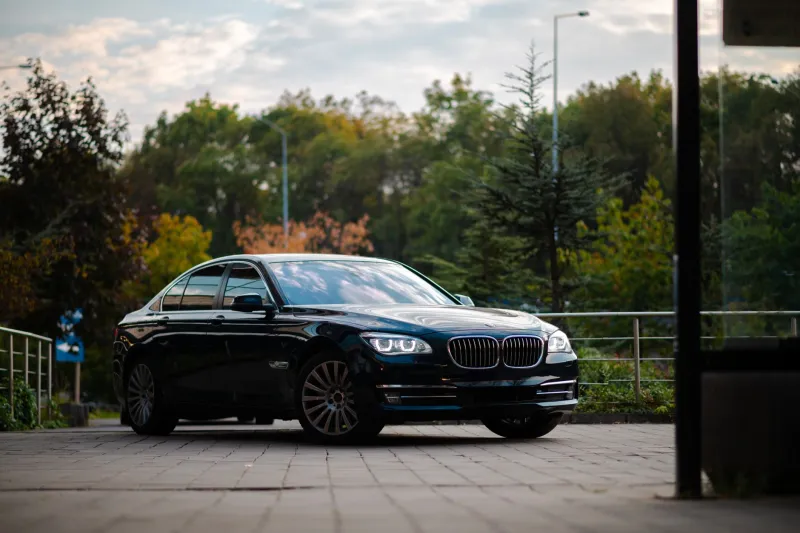
Gentlemen travelling in a blazer should also consider the car itself: a suit jacket worn for four hours in a warm enclosure will not benefit from being folded onto a parcel shelf. Hanging space in the vehicle is not a luxury on a day such as this; it is the difference between arriving crisp and arriving creased.
Arrival: The Point at Which the Car Stops
Henley's traffic management is thorough and, on Regatta days, non-negotiable. Parking in the town centre is heavily restricted, several roads operate one-way systems or closures, and access to the immediate vicinity of the enclosures is controlled by stewards. A private car attempting to reach the gate is, in practice, a private car attempting to hold up a very long line of other vehicles.
The workable arrangement is a designated drop-off point agreed in advance with the operator, typically a short walk from the ground, with the passenger disembarking and the vehicle departing promptly. The precise locations are set by the Regatta's traffic plan each year, so confirmation should be sought in the weeks before the day rather than assumed from a previous season.
The walk from the drop point is part of the occasion. It is also the reason a linen suit and a heavy picnic hamper are an unwise combination. Where possible, divide the load: one bag per person, with the bulkier items consolidated into a single holdall that a stronger member of the party can manage.
The Picnic as a Logistical Exercise
Henley's picnic culture is one of its great pleasures and one of its quieter sources of friction. Tables on the bank are claimed early, space is finite, and a hamper designed for a garden is not necessarily a hamper designed for a towpath.
A few principles serve well. Pack in stackable containers rather than in a single deep basket. Bring real glassware if you wish, but accept that it must be carried out again. Chill what needs chilling in a cool box in the vehicle's boot rather than in the hamper itself, and restock from the car only if the day's plan allows a return to it — which, for most parties, it will not. Champagne, if it is coming, travels better in the car than on the shoulder.
It is also worth remembering that the chauffeur is not a porter. A driver will hold coats and a cool box; a driver will not carry a table through a crowd. The division of labour should be settled before departure, not at the drop-off point.
Crowds, Booms and the Walking Distances
The course runs from Temple Island to the finish, and the bank between them becomes densely populated as the afternoon advances. The bridge is a bottleneck, the towpath narrows in places, and the difference between a ten-minute and a thirty-minute walk can be a single race's worth of spectators arriving at once.
Guests with mobility considerations should raise them at the planning stage. The ground is largely flat but the surfaces are uneven, and a wheelchair or a guest who tires easily will benefit from a drop point chosen with that in mind rather than one chosen for the general convenience of the traffic plan.
Timing the Return
The final race concludes, the enclosures begin to empty, and Henley's roads absorb the result. The two competing instincts — to leave immediately and join the exodus, or to linger and let the town settle — produce broadly similar outcomes unless one is managed deliberately.
A useful rule is the two-race rule: depart after the penultimate race of the day, or wait a clear forty minutes after the last. The first option costs you the final, which for many is the point of the afternoon; the second costs you nothing but a little patience, and it is usually the better trade. A chauffeur holding a confirmed pick-up window can position the car as the crowd thins rather than competing for the same stretch of kerb as several hundred other vehicles.
The return journey itself should be treated as part of the day rather than as an afterthought. Water, a cool towel, a spare pair of shoes and a working charging point in the rear cabin turn a tired hour into a comfortable one.
A Short Packing List for the Rear Cabin
- A flat pair of shoes, per guest, without exception.
- A wrap or light jacket for the evening.
- Sunscreen and a hat that will survive a breeze.
- A cool box in the boot, restocked before departure.
- A small folding umbrella, for the British interpretation of a summer forecast.
- Water, and rather more of it than seems necessary.
The Quiet Advantage
Henley is a day that rewards composure. The racing is excellent, the setting is difficult to improve upon, and the pleasure of the occasion lies in being unhurried in a place that is, for one week each summer, extremely hurried. A well-organised chauffeur does not make the Regatta more glamorous. It makes it calmer — and calm, on the bank at Henley, is the rarest and most valuable accessory of all.