Silence as a Status Symbol: The Case for an Electric Chauffeur Day in 2026
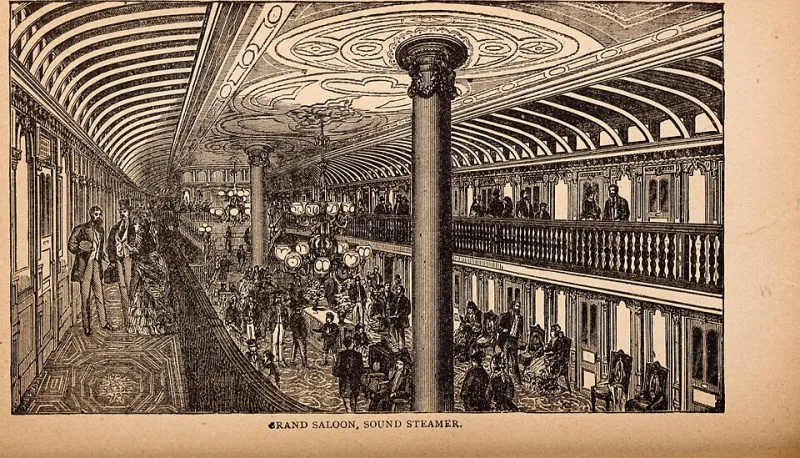
Photo: Internet Archive Book Images, No restrictions, via Wikimedia Commons
The arrival that says nothing
Luxury used to be audible. For much of the last century, a large engine settling at the kerb was the announcement: the deep idle, the faint tremor through the floor, the certainty that something expensive had drawn up outside. In 2026 that grammar has quietly inverted. The most considered arrival in a British city street is frequently the one nobody hears at all.
Electric chauffeur travel has moved, within a handful of years, from novelty to preference among the clients we carry. The reasons are rarely the ones printed on a brochure's sustainability page. They concern attention, rest, and the texture of an hour spent in the back of a car.
What silence actually buys
The first thing passengers remark upon is that conversation no longer requires effort. At motorway speed there is road noise and wind noise, but no engine drone beneath them, and the difference is not marginal. A call can be taken at an indoor voice. A document can be read without a headache forming. A guest who has flown overnight can sleep for forty minutes and arrive in a condition fit to be seen.
The second is the absence of vibration. Idling at a red light in a conventional saloon, the cabin carries a constant low tremor that most passengers have long since stopped noticing and never quite stop feeling. In an electric car it simply stops. Between appointments, that matters more than any specification sheet admits.
Smoothness is the real specification
Regenerative braking, a single-speed transmission and the absence of a kickdown all combine into something the industry struggles to name and every passenger recognises immediately. The car does not lurch. It gathers pace and sheds it again with an evenness that feels less like acceleration and more like intent.
For anyone prone to travel sickness, or wearing something that creases, or old enough to prefer not to be thrown about between junctions, this is not a technicality. It is the entire experience. The rear cabin becomes a place where work is possible, and rest is possible, rather than a place where one merely waits.
Charging, discussed honestly
Every client asks about range, and every sensible operator answers without theatre. A battery is not infinite and a chauffeur who pretends otherwise is selling a story rather than a service.
What good planning looks like is unglamorous and effective. The vehicle is charged overnight at the depot and pre-conditioned, so the cabin is already at temperature when the passenger steps in on a January morning. On a day of meetings, the top-up happens at a rapid hub while the client is inside a building, not while they are sitting in the car watching a percentage climb. Where a longer journey is unavoidable, a stop of twenty-five to thirty minutes is built into the schedule and timed to coincide with lunch or a call, rather than imposed at an inconvenient moment.
There are also journeys for which a battery is simply the wrong instrument. A four-hundred-mile winter day into the Highlands, with two hours of margin required and few reliable chargers on the final stretch, is not improved by insistence. An honest operator will say so and provide a plug-in hybrid or a conventionally powered car rather than force the narrative. Clients tend to remember that candour long after they have forgotten the badge on the boot.
City access, and a changed arithmetic
Birmingham, Manchester, Glasgow, Bristol, Sheffield, Newcastle and Bradford all operate clean air zones of one kind or another. A compliant electric vehicle generally pays nothing to enter them, which is a small mercy on a day of four appointments.
London is the useful exception. Following the withdrawal of the cleaner vehicle discount, electric cars now pay the Congestion Charge in the same manner as everything else, and vehicle excise duty applies as it does to any other car. Electric is therefore no longer a means of avoiding a fee. It is a means of gliding through a residential square at half past five in the morning without waking anybody, which is a different and rather better argument.
The environmental case, without the sermon
No one at Avanti Limousines is going to claim that a car has no footprint. Tyres shed particulates regardless of what powers the wheels, and the grid is not yet blameless. But per mile travelled, in a country whose electricity generation grows cleaner with each passing year, the arithmetic is straightforward and improving. For a corporate account with a sustainability report to write, that is a useful paragraph. For a private client, it is a pleasant side effect of a better journey.
Questions worth asking an operator
- What is the realistic motorway range in cold weather, not the quoted figure?
- Which charging networks does the company use, and are accounts already set up?
- Will the car be pre-conditioned before collection?
- Is a backup vehicle available if a charger fails?
- Do rear-seat amenities, such as climate control and screens, draw noticeably on the battery?
- On which routes would the company itself recommend a hybrid instead?
A quieter signature
There is a certain kind of confidence in arriving without announcement. The electric chauffeur day is not a compromise dressed as a virtue; it is, on most British city itineraries, simply the more restful and more refined way to travel. Silence, it turns out, is an excellent hospitality.