The Station Is the Starting Line: Rail, Road and the Civilised City Day in 2026
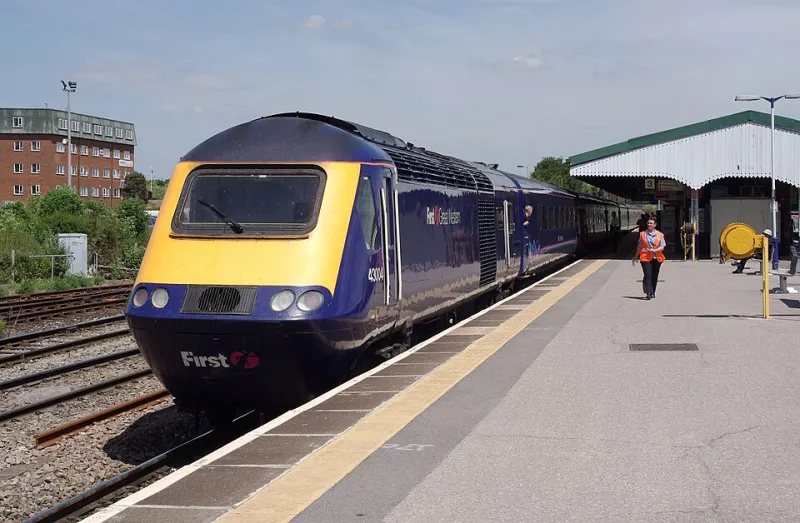
Photo: mattbuck (category), CC BY-SA 3.0, via Wikimedia Commons
There is a quiet argument to be made that the most civilised way to begin a British city day is not at an airport at all. It is at a railway station. The train delivers you into the centre of the city, not to a perimeter field; the chauffeur meets you at the platform, not in a distant car park; and the day begins with a short, purposeful transfer rather than a long, uncertain recovery from the airport road. In 2026, with city centres increasingly hostile to casual driving and airport transfers increasingly time-consuming, rail plus chauffeur deserves to be treated as the default for many journeys.
The airport is not always the front door
Airports are magnificent pieces of infrastructure, but they are not city terminals. They are designed to process large volumes of people at a distance from the places those people actually wish to visit. For a short UK city break, a business meeting or a country-house lunch, the airport can add an hour or more of transfer time, plus the low-grade anxiety of baggage reclaim and taxi queues. The train, by contrast, often deposits passengers within a ten-minute drive of the hotel, the office or the restaurant.
This is not an argument against flying. It is an argument for matching the arrival point to the purpose of the journey. If the purpose is London, Manchester or Edinburgh itself, the station is frequently the better start. If the purpose is a remote estate or a rural hotel, the calculation may differ. But for the classic UK city day, rail and road combine more elegantly than air and road.
What a station meet actually looks like
The phrase meet-and-greet is often used loosely. At its best, it describes a precise sequence. The chauffeur monitors the train’s arrival, positions the car legally and conveniently, and meets the guest at an agreed point on the platform or concourse. Luggage is taken before the guest has to think about it. The walk to the car is short. The route onward is already planned.
This matters most when the train is delayed. A good chauffeur does not treat a late arrival as a crisis; it is simply a variable to be absorbed. The car waits, the meeting point is adjusted and the onward schedule is protected where possible. For business travellers, this is the difference between arriving at a meeting composed and arriving flustered. For leisure travellers, it is the difference between a day that begins with friction and one that begins with a sense of occasion.
Luggage, timing and the onward route
Luggage is the quiet test of any transfer. A station forecourt is rarely designed for prolonged waiting, and a guest burdened with cases should not be expected to navigate it alone. The chauffeur’s role is to remove that burden at the earliest possible moment: meeting the train, taking the bags, bringing the car to the nearest accessible point and loading without haste.
Timing should be built around the train, not around a rigid collection slot. A sensible booking includes the train number, the expected arrival time and a fallback contact number. The onward route should be discussed in advance, particularly if it involves a hotel check-in, a restaurant reservation or a country-house arrival window. A short stop at the hotel to leave bags can often be built into the transfer without disrupting the day.
Euston, King’s Cross, Waverley and Piccadilly compared
London Euston is efficient but unforgiving. Its forecourt is busy, and the difference between a smooth collection and a frustrating one lies in the precise meeting point. King’s Cross is more generous, with a greater sense of space and good access to the surrounding roads. Both stations reward a chauffeur who knows the local restrictions and can reposition without delay.
Edinburgh Waverley is unusual in being below the level of the surrounding streets, which makes the meeting point especially important. A guest who has not visited before may not appreciate how quickly the station opens onto the Old Town. A chauffeur can remove that uncertainty by meeting inside and guiding the party to the car.
Manchester Piccadilly is a strong example of a station that functions as a city gateway. It sits close to the centre, with good road access and a manageable transfer to the principal hotels and business districts. For a Manchester meeting or a day at the city’s galleries, it is a more sensible arrival point than the airport.
When rail plus chauffeur makes sense
The combination is at its best for city days, theatre visits, business meetings, country-house lunches and event transfers where the train journey is part of the pleasure. It is less useful when the destination is genuinely remote or when the party is carrying equipment that is difficult to move by rail. But those are exceptions. For most UK city itineraries, the train is the civilised spine of the journey, and the chauffeur is the connective tissue.
There is also a sustainability argument, though it should not be overstated. Rail is generally the lower-carbon choice for intercity travel, and a chauffeur car can consolidate the local movements that would otherwise be made by several taxis. The greater benefit, however, is experiential: a calmer arrival, a simpler departure and a day that is not bookended by the stress of airport logistics.
The case for a calmer arrival
Britain’s railway stations are not always tranquil places, but they are honest ones. They place you in the city you have come to see. A chauffeur waiting at the platform turns that arrival into a managed transition: luggage taken, route settled, temperature controlled, time protected. In 2026, that is not a luxury to be apologised for. It is simply a better way to begin.